

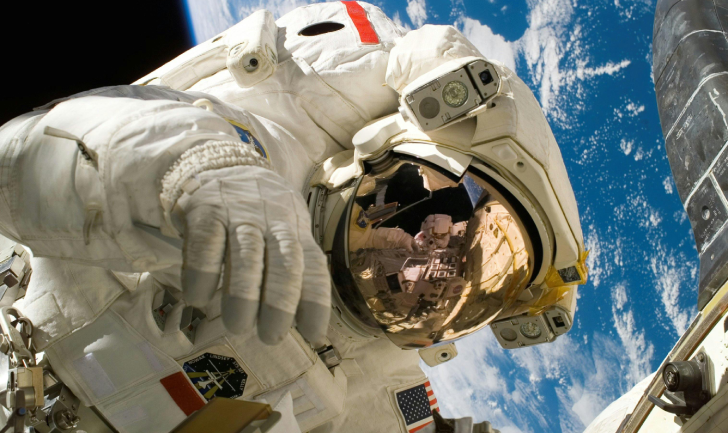
A Wrench Can Be Emailed to Astronauts – How Is That Possible?
The use of 3D printers in space represents a significant step forward in space exploration and habitation, offering greater flexibility and efficiency for astronauts working in the challenging environment of space.

Yes, astronauts use 3D printers aboard the International Space Station (ISS) for a variety of purposes.
Advantages of 3D Printing in Space
On-Demand Manufacturing:
Astronauts can create tools, parts, or equipment as needed, reducing the dependency on resupply missions from Earth.
Customization:
Custom parts or tools can be designed and manufactured to meet specific needs or solve problems that arise during missions.
Reduction of Waste:
3D printing can help in reducing waste by creating only the items required, and any excess material can be reused in the printing process.
Space and Weight Efficiency:
Instead of sending large numbers of spare parts, astronauts can send 3D printers and raw materials, which are more compact and lighter.
Key Examples of 3D Printing in Space
Made In Space’s AMF (Additive Manufacturing Facility):
Installed on the ISS, this 3D printer was used to manufacture various parts and tools. The AMF allows astronauts to print plastic components, which are then tested for their suitability in space.
First 3D Printed Tool:
In 2015, astronauts aboard the ISS used the first 3D-printed tool, a socket wrench, to complete a task that was previously challenging. This demonstrated the practical application of 3D printing in space missions.
NASA’s Project:
NASA has been testing different 3D printing technologies, including printing with metals and composites, to understand their performance in microgravity and how they can be used for future missions, including deep space exploration and Mars colonization.
Experimental Prints:
The ISS has been used to test different materials and printing techniques. For example, experiments include printing with metal alloys, ceramics, and bio-materials to see how they perform and what new possibilities they can offer.
Future Potential
In-Situ Resource Utilization (ISRU):
Future missions might use 3D printing to utilize local resources (like lunar or Martian regolith) to build structures or tools, minimizing the need for Earth-based supplies.
Healthcare and Repair:
3D printing could enable the production of medical devices and parts for repairing spacecraft, making it easier to address emergencies without waiting for resupply missions.