

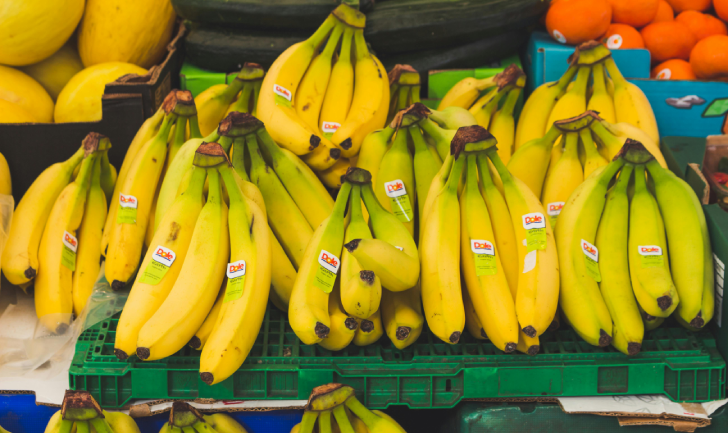
You’re Actually Bananas – Or Would You Rather Be Nuts?
Approximately 60% of human DNA is similar to that of bananas. This high percentage of shared DNA underscores the common evolutionary origins of all life on Earth. While the overall genetic material is quite different, there are many basic biological processes and functions that are conserved across species.

Cellular and Molecular Level
Cellular Structures:
Both humans and bananas are made up of eukaryotic cells, which are characterized by having a nucleus and other membrane-bound organelles. This structural similarity is a common trait among all eukaryotic organisms, including plants and animals.
Protein Functions:
Many of the proteins that are encoded by these shared genes perform similar functions in humans and bananas. For example, both organisms have proteins involved in cellular respiration, DNA repair, and other essential cellular processes.
Evolutionary Perspective
Common Ancestor:
The genetic similarities can be traced back to a common ancestor of all eukaryotes. Over millions of years, the lineages that led to modern humans and bananas diverged, but they retained many fundamental genetic and biochemical traits.
Conserved Genes:
Evolution conserves genes that are critical for basic life functions. This is why even distantly related organisms like humans and bananas can have such a significant amount of shared DNA. These conserved genes highlight the commonalities in the biochemistry of all living organisms.
Practical Implications
Genetic Research:
The shared DNA between humans and bananas can be useful in genetic research. Understanding these common genes helps scientists learn more about basic biological processes, which can be applied to various fields such as medicine, agriculture, and biotechnology.
Comparative Genomics:
By comparing the genomes of different species, researchers can identify which genes are conserved and essential for life. This comparative approach provides insights into gene function and the evolutionary history of different organisms.
Conclusion
While it might be amusing to think about how humans are like bananas, the genetic similarity between the two highlights the interconnectedness of all life forms on Earth. Despite vast differences in appearance and complexity, humans and bananas share a significant portion of their DNA, reflecting common evolutionary roots and fundamental biological processes that are conserved across species.