

Dance Yourself Silly and Dead – What Song Would You Choose?
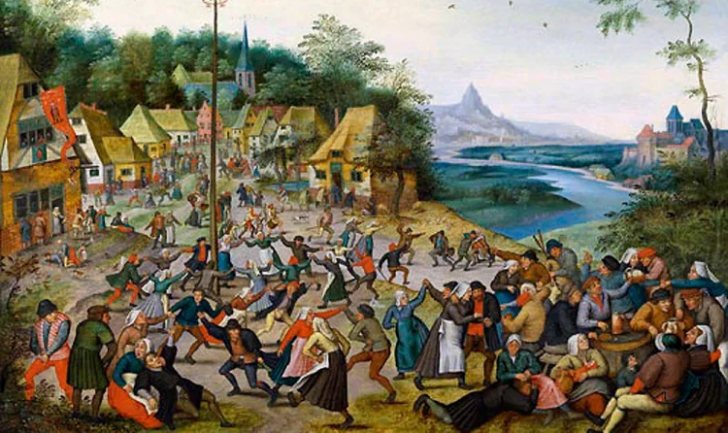
The Dancing Plague of 1518 was a bizarre and mysterious event that took place in Strasbourg (then part of the Holy Roman Empire, now in modern-day France) in July 1518. It involved numerous people dancing uncontrollably and seemingly unwillingly for days on end.

Initial Case:
The dancing mania began in July 1518 when a woman named Frau Troffea stepped into the streets of Strasbourg and started to dance fervently and uncontrollably. She danced for several days without stopping, except for brief periods of rest.
Spread:
Within a week, more than 30 other residents had joined her, dancing uncontrollably. The number of participants eventually grew to around 400 people.
Duration:
The dancing plague lasted for about two months, during which many people danced until they collapsed from exhaustion, and some reportedly died from heart attacks, strokes, or sheer exhaustion.
Explanations and Theories
Mass Hysteria:
One widely accepted theory is that the event was a case of mass hysteria or a psychological phenomenon where a group of people simultaneously experience the same symptoms without a clear physical cause. Stress and the hardships of the time, including famine and disease, may have triggered this collective psychogenic illness.
Ergot Poisoning:
Another theory suggests that the dancers were victims of ergot poisoning, caused by consuming bread made from rye infected with the ergot fungus. Ergot contains chemicals similar to LSD, which can cause hallucinations and convulsions. However, ergotism usually causes more symptoms than just dancing, such as severe pain and gangrene, which were not reported in this case.
Religious and Superstitious Beliefs:
Some historians believe that religious and superstitious beliefs played a role. The period was marked by widespread belief in supernatural forces and saints, and it was thought that the dancing could be a curse or divine punishment. Saint Vitus, the patron saint of dancers, was often invoked, and some believed the dancers were possessed by his spirit.
Cultural and Social Factors:
The social and cultural environment of the time, marked by extreme hardships, may have contributed to the phenomenon. Collective stress and the psychological impact of living in a time of frequent outbreaks of disease and famine could have manifested in this extraordinary way.
Responses and Aftermath
Medical and Civic Response:
Authorities initially responded by encouraging more dancing, thinking that the dancers would recover if they continued. Musicians and professional dancers were even brought in to help the afflicted continue their dancing. However, this only made the situation worse.
Religious Interventions:
Eventually, the dancers were taken to a shrine dedicated to Saint Vitus, and prayers and religious ceremonies were conducted to heal them. This approach seemed to be more effective, and the plague gradually subsided.
Historical Impact:
The Dancing Plague of 1518 remains one of the most well-documented and bizarre cases of dancing mania in history. It has been the subject of numerous studies, books, and articles, and continues to fascinate historians, psychologists, and medical researchers.
Legacy
The Dancing Plague of 1518 is often referenced in discussions about mass hysteria and collective behavioral phenomena. It serves as a historical example of how social, psychological, and environmental factors can converge to create extraordinary events. Despite various theories, the exact cause of the dancing plague remains a topic of debate and speculation.