

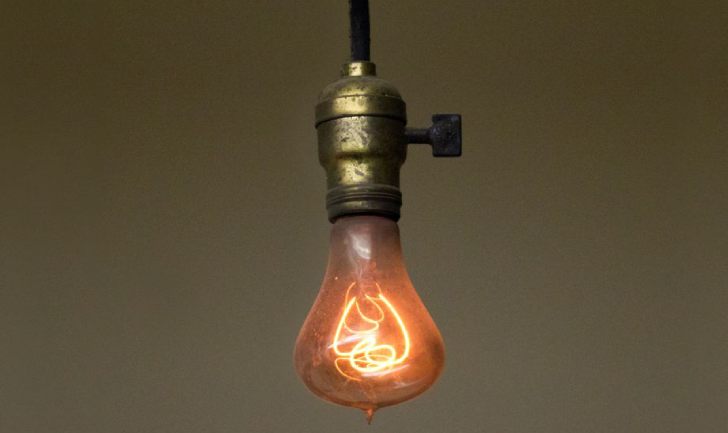
The Light Is On, but Is Anyone Home?
The Centennial Light’s enduring glow not only illuminates the room but also shines a light on the history of electrical engineering and the evolution of manufacturing practices. Its continued operation stands as a remarkable achievement and a cherished piece of Livermore’s heritage.

The history of light bulbs is a fascinating journey of innovation and technological progress that spans over a century.
Early Beginnings
Arc Lamps (Early 19th Century):
In the early 1800s, Humphry Davy invented the first electric light by creating an arc between two carbon rods using a battery. These arc lamps were used in street lighting and lighthouses but were impractical for indoor use due to their brightness and complexity.
Incandescent Lamp Prototypes (Mid-19th Century):
In 1841, Frederick de Moleyns received a patent for an incandescent lamp using platinum filament, but it was not commercially viable.
In 1854, Heinrich Göbel claimed to have created a working incandescent lamp with a carbonized bamboo filament, but his claims were not substantiated until later.
Commercial Development
Thomas Edison and Joseph Swan (Late 19th Century):
Joseph Swan: In 1878, English physicist Joseph Swan developed a practical incandescent light bulb using a carbonized paper filament. He received a British patent in 1878 and installed the first electric lighting in a home.
Thomas Edison: In 1879, American inventor Thomas Edison independently developed an improved incandescent bulb with a carbon filament that could last for up to 1,200 hours. Edison received a U.S. patent in 1880. His work, along with the creation of an electric power distribution system, made electric lighting practical and widespread.
Collaboration and Legal Disputes:
Edison and Swan eventually resolved their patent disputes by forming a joint company, Edison & Swan United Electric Light Company, in 1883.
Improvements and Advancements
Filament Innovations:
Tungsten Filaments: In 1906, General Electric began using tungsten filaments, which are more durable and efficient than carbon filaments. Tungsten remains the standard filament material for incandescent bulbs to this day.
Coiled Filament: In 1910, William David Coolidge developed a method to produce ductile tungsten, allowing filaments to be coiled, which improved efficiency and lifespan.
Vacuum and Gas-Filled Bulbs:
Early incandescent bulbs were evacuated to remove air, but in 1913, Irving Langmuir discovered that filling the bulb with inert gas (like argon or nitrogen) reduced filament evaporation, further increasing lifespan and efficiency.
Fluorescent and Discharge Lamps
Fluorescent Lamps:
In 1901, Peter Cooper Hewitt developed the mercury-vapor lamp, an early form of the fluorescent lamp.
In the 1930s, General Electric introduced the first practical fluorescent lamps, which became popular for their efficiency and cool light, ideal for industrial and commercial use.
High-Intensity Discharge (HID) Lamps:
Developed in the mid-20th century, HID lamps include metal-halide, high-pressure sodium, and mercury-vapor lamps. These are used for street lighting, stadiums, and large indoor spaces due to their high efficiency and brightness.
Modern Innovations
Halogen Lamps:
Introduced in the 1950s, halogen lamps are a type of incandescent lamp that uses a halogen gas to increase efficiency and lifespan. They produce a brighter light and have a longer life than traditional incandescent bulbs.
Light Emitting Diodes (LEDs):
LEDs, invented in the early 1960s, initially produced only low-intensity red light. Advances over the decades led to high-intensity blue and white LEDs.
By the early 2000s, LEDs became viable for general lighting. They are highly efficient, long-lasting, and versatile, rapidly becoming the standard for both residential and commercial lighting.
Compact Fluorescent Lamps (CFLs):
Developed in the 1980s, CFLs are a type of fluorescent lamp designed to fit into standard light sockets. They use less energy and last longer than incandescent bulbs but have been largely supplanted by LEDs due to the latter’s superior performance and environmental benefits.
Current Trends and Future Directions
Smart Lighting:
Modern lighting technology includes smart bulbs that can be controlled via smartphones and integrate with home automation systems. These bulbs often feature adjustable brightness, color, and scheduling.
Sustainability and Efficiency:
The focus on energy efficiency and sustainability continues to drive innovations in lighting technology. Efforts are ongoing to develop even more efficient lighting solutions, reduce the environmental impact of production and disposal, and improve the quality of light for health and well-being.
The evolution of light bulbs reflects broader trends in technology, from the early days of experimentation and discovery to the sophisticated, energy-efficient systems of today. Each advancement has brought improvements in performance, efficiency, and utility, illuminating the way we live, work, and interact with our environment.