

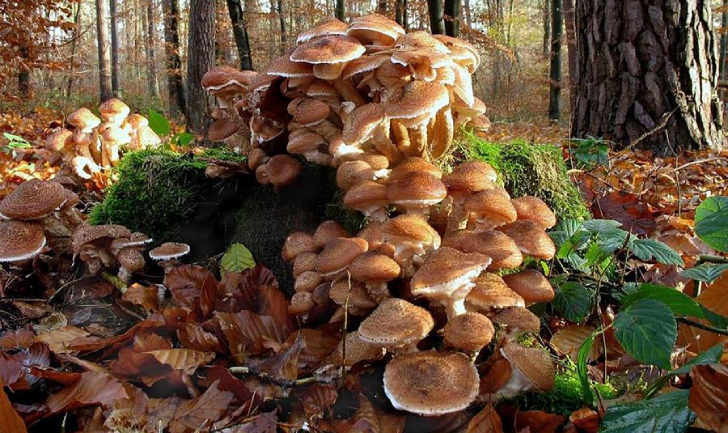
What Is a Humongous Fungus?
Armillaria ostoyae, commonly known as the honey fungus, is a species of fungus in the genus Armillaria. It is known for forming some of the largest living organisms on Earth due to its extensive underground mycelial networks.

Humongous Fungus Overview
Armillaria Ostoyae (Honey Fungus)
Location: Malheur National Forest, Oregon, USA
Size: Covers approximately 2,385 acres (965 hectares)
Age: Estimated to be around 2,400 to 8,650 years old
Discovery: Identified in the late 1990s
Armillaria Solidipes (formerly Armillaria Ostoyae)
Location: Blue Mountains, Eastern Oregon, USA
Size: Spans an estimated 3.5 miles (5.6 kilometers) across
Age: Estimated to be between 1,900 and 8,650 years old
Characteristics
Structure: The bulk of the fungus exists as a network of mycelium, which are thread-like structures that spread through the soil. The visible parts, called fruiting bodies or mushrooms, are just a small part of the organism.
Growth: The fungus spreads by extending its mycelium through the soil and can infect and decompose tree roots, which sometimes leads to tree death.
Ecological Impact
Role in Ecosystem: Armillaria species play a dual role. They are decomposers, breaking down dead organic matter, and can also be pathogens, causing root rot in trees and shrubs.
Forest Health: While they can be detrimental to certain trees, they also contribute to nutrient cycling and the overall health of forest ecosystems.
Scientific and Public Interest
Research: The discovery of such large fungal colonies has provided valuable insights into fungal biology, genetics, and ecology. It has prompted further research into the growth patterns and longevity of fungi.
Popular Culture: The term “Humongous Fungus” has captured public imagination and is often highlighted in discussions about the natural world’s marvels.
Conservation and Management
Forest Management: In areas where Armillaria species are particularly aggressive and harmful to forests, management practices may include removing infected trees and using resistant tree species for replanting.
Conservation: Recognizing the ecological significance of these fungi, efforts are made to balance their presence with the health and sustainability of forest ecosystems.