

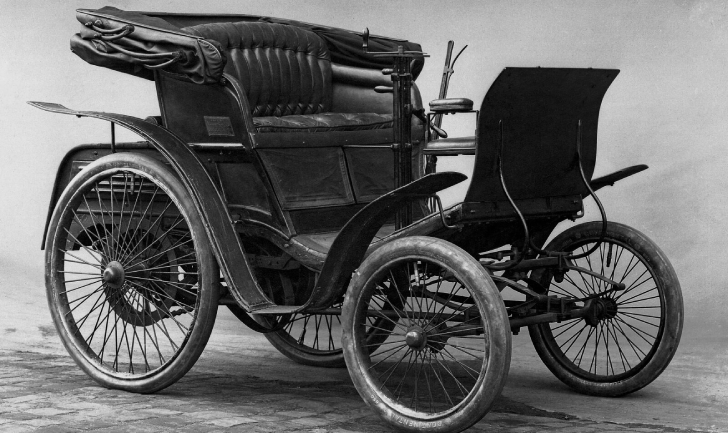
How Walter Arnold Made a Historic Name for Himself – How Fast Is Too Fast In 1886?
Walter Arnold (1841–1927) is known for a notable place in the history of transportation. On January 1, 1896, Arnold became the first person in England to be convicted of speeding. He was driving his Benz Velo at 8 miles per hour in a 2-mile-per-hour zone in Paddock Wood, Kent, which was the speed limit at the time. This incident is often cited as one of the earliest recorded speeding offenses.
Occupation: Arnold was a wealthy businessman and motorist.
Historic Speeding Incident: Arnold’s case is significant because it marked one of the first legal instances of a speeding violation, highlighting the growing impact of motor vehicles on society and the need for traffic regulations.
Legal Context: At the time, the laws governing vehicle speed were very strict, and Arnold’s conviction was based on the Locomotive Act of 1865, also known as the “Red Flag Act,” which was designed to regulate the use of motor vehicles on public roads.

The history of speed limits is a fascinating journey through the development of road safety and automobile regulations.
Early Regulations:
Locomotive Act of 1865 (The Red Flag Act):
Background: In the late 19th century, before cars became common, steam-powered road vehicles were regulated in the UK by the Locomotive Act of 1865. This legislation was designed to limit the use of these early vehicles.
Provisions: The act required self-propelled vehicles to travel at a maximum speed of 4 miles per hour (mph) on open roads and 2 mph in towns. Vehicles also had to be preceded by a man on foot waving a red flag and blowing a horn, which effectively limited their use and development.
Early 20th Century:
Automobile Emergence: As motor vehicles became more popular, the limitations of the Red Flag Act became apparent. By the early 1900s, the automobile industry had begun advocating for more reasonable regulations.
Modern Speed Limits:
1920s:
Introduction of Speed Limits: With the rise of automobiles, more formalized speed limits were introduced. In the UK, the first official speed limit for motor vehicles was introduced in 1930 with the Road Traffic Act, setting the limit at 30 mph in built-up areas.
1950s-1960s:
Increased Limits: In the United States, the 1950s saw the establishment of a national speed limit with the Federal-Aid Highway Act of 1956, which authorized the creation of the Interstate Highway System. Speed limits varied by state, but in 1965, the National Maximum Speed Law was enacted, setting a maximum speed limit of 55 mph on interstate highways to improve safety and conserve fuel.
1970s-1980s:
Changes and Repeal: In response to the 1973 oil crisis, the 55 mph speed limit was strictly enforced as a measure to conserve fuel. However, this limit was controversial and led to varying state laws. In 1987, the federal speed limit was increased to 65 mph on rural interstate highways, and in 1995, the National Speed Limit Law was repealed, giving states the authority to set their own limits.
1990s-Present:
Variable Limits and Technology: In recent decades, many countries have adopted variable speed limits based on traffic conditions, weather, and road types. Technological advancements, such as automatic speed enforcement and GPS-based systems, have also become part of the regulatory landscape to enhance road safety.
Global Trends:
Different Standards: Speed limits vary significantly around the world. For example, many European countries have autobahns with no general speed limits, though there are recommended speeds. In contrast, other regions enforce strict limits to manage traffic flow and ensure safety.
Safety and Efficiency: The evolution of speed limits reflects the balance between enhancing road safety and accommodating the increasing speeds of modern vehicles. Adjustments in speed limits are often based on factors such as road conditions, traffic volume, and technological advancements.